Sacred Geography
Where the veil between heaven and earth grows thin
In Taoism, mountains are more than landscape. They are places of revelation — dwelling places of deities, meeting points of cosmic energies, and classrooms where generations of seekers have learned to listen. Four mountains stand at the heart of this sacred geography.
The Sacred Land
Grotto-heavens and blessed grounds
Taoist tradition imagines the earth as threaded with hidden worlds: ten great grotto-heavens, thirty-six lesser grottoes and seventy-two blessed grounds. These are not merely caves or scenic spots but concentrated fields of qi where the ordinary and the sacred overlap.
The four great mountains are among the most revered of these places. Each is associated with a particular deity, a founding master and a school of practice — and each has served for centuries as a living centre of Taoist life.
 武當
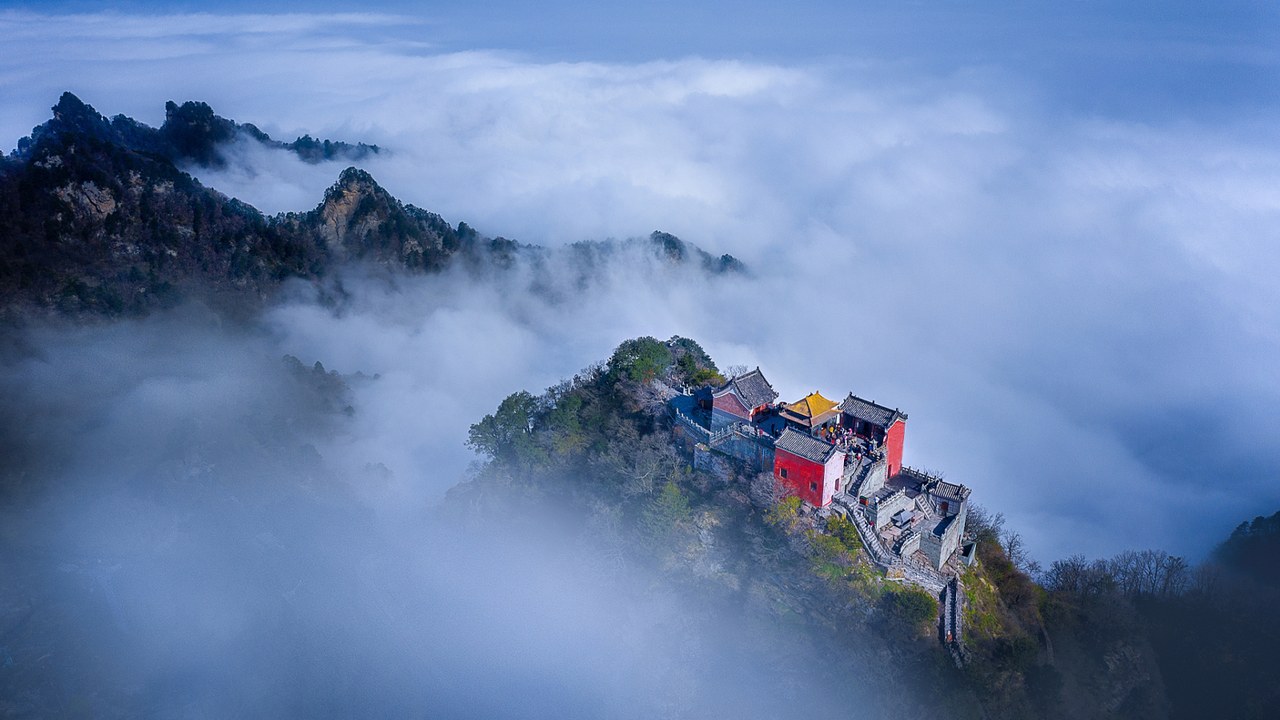
Wudang · 武當山
Rising from the plains of northern Hubei, Wudang is dedicated to Zhenwu, the Dark Warrior of the north. In the fifteenth century the Ming emperor Yongle built a vast complex of palaces and temples here, making it one of the great religious centres of imperial China.
Wudang is also the cradle of an extraordinary martial tradition. Legend holds that the monk Zhang Sanfeng created Tai Chi after watching a crane and a snake contend on the mountain. Today its monasteries remain a place where martial art, meditation and ritual are trained as one.
 龍虎
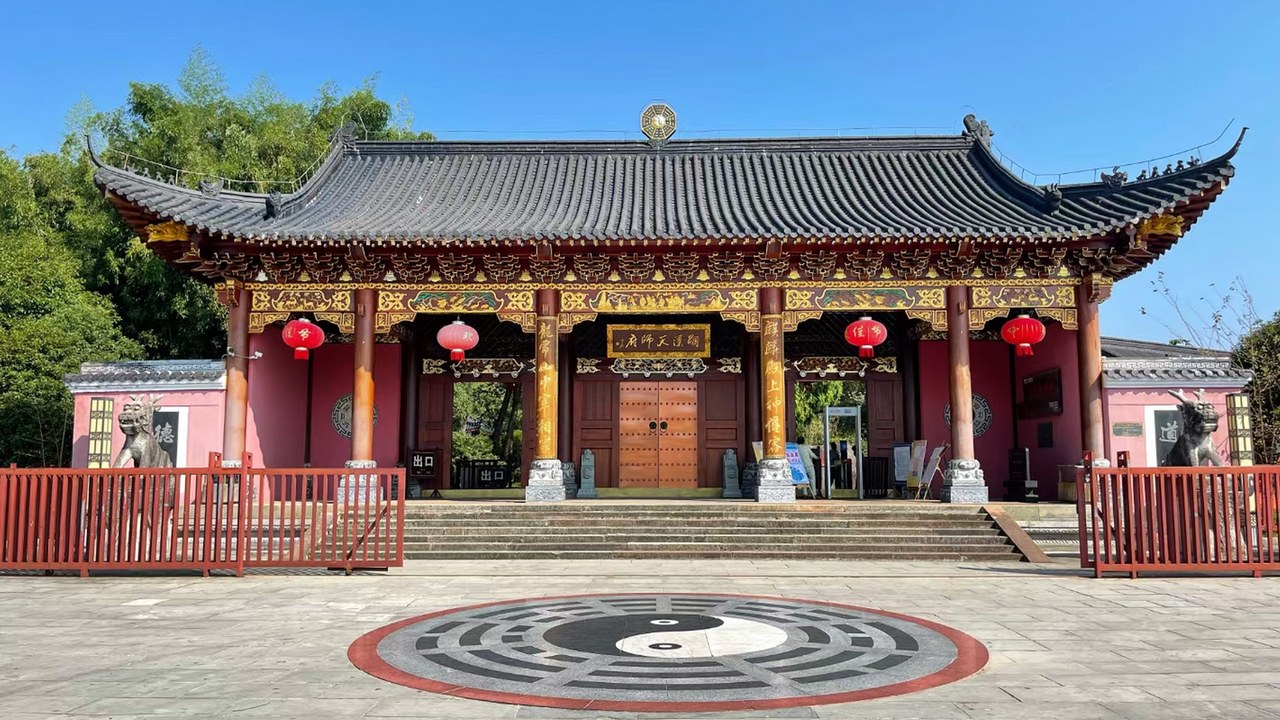
Longhu · 龍虎山
Named for two peaks said to resemble a dragon and a tiger, Longhu is the ancestral home of the Zhengyi school and the line of Celestial Masters descended from Zhang Daoling. For nearly two thousand years this lineage has been centred here.
The mountain is renowned for its ritual and talismanic tradition — for fu, incantations and the liturgies that join the human and celestial realms. The Celestial Master's Mansion still stands beside the river, a living seat of the Zhengyi tradition.
 青城
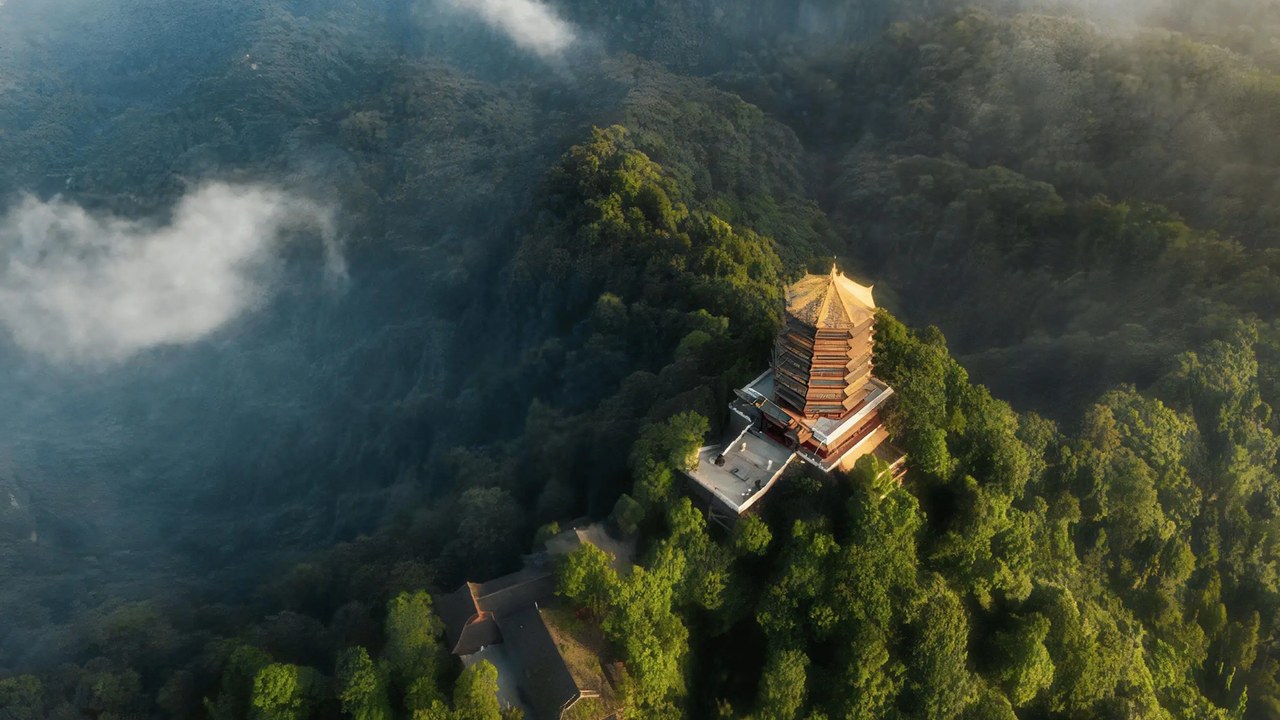
Qingcheng · 青城山
Qingcheng, 'the green city mountain', is famed for its deep forests and quiet valleys. It was here, in the second century CE, that Zhang Daoling received the revelation that founded organized Taoism and began teaching the Way of the Five Bushels of Rice.
The mountain's Taoist temples are woven into the landscape rather than imposed upon it. Paths climb through bamboo and mist to halls where the atmosphere of seclusion — the celebrated 'Qingcheng serenity' — has been cultivated for generations.
 茅山
Maoshan · 茅山
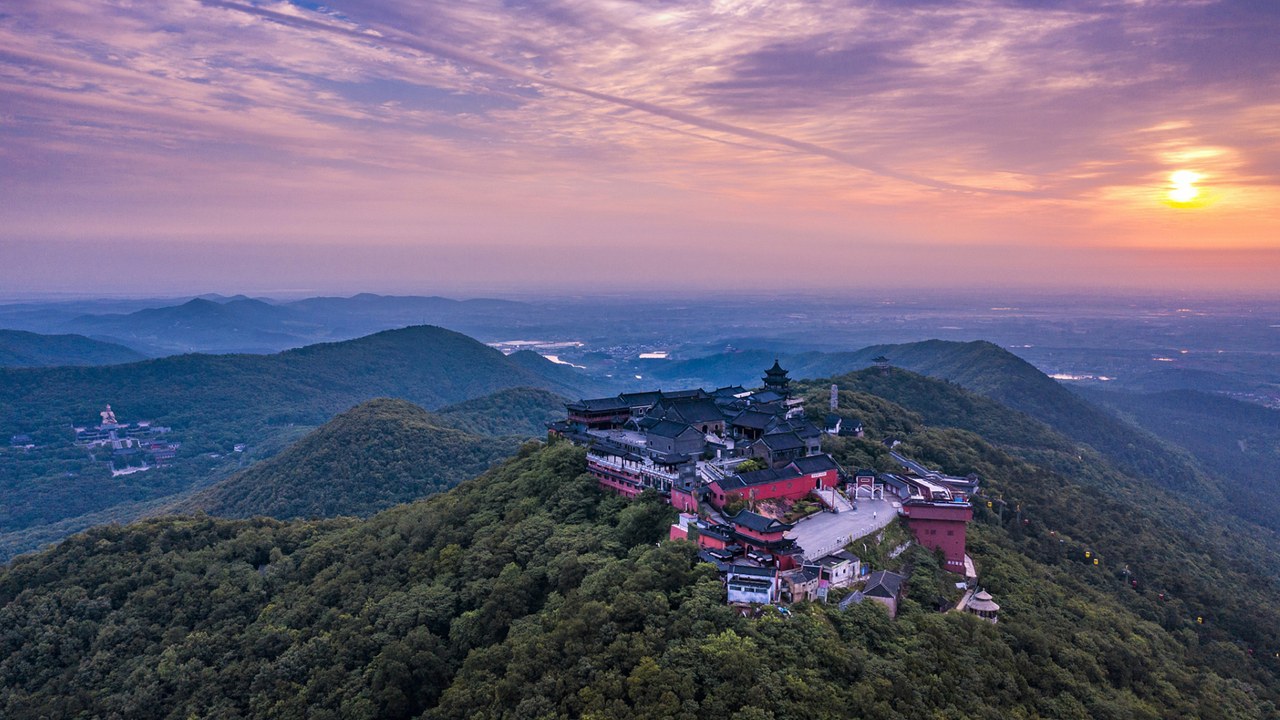
Maoshan takes its name from the three Mao brothers, immortals who are said to have attained the Way here in the first century BCE. The mountain became the centre of the Shangqing, or Highest Clarity, school — a tradition of meditation, visualization and inner alchemy.
Its scriptures describe a rich inner landscape of deities and energy centres, and its practices shaped the development of later Taoist meditation. Maoshan remains a place where the contemplative and the alchemical dimensions of the tradition are kept alive.
The Journey
Why pilgrimage matters
To climb a sacred mountain is to leave ordinary routine behind and to place the body in a landscape charged with meaning. The physical journey mirrors an inner one: ascent, effort, thinning air, and finally a wider view.
Pilgrimage is not about reaching a summit for its own sake. It is about arriving with a different mind — and carrying something of that clarity back down into everyday life.